


The small things that help an aging dog or cat stay comfortable are mostly ordinary ones: keeping weight off sore joints, working gentle movement into the day, and putting food, water, and a litter box where they can be reached without a jump. Rugs over slick floors give tired legs something to grip, and a ramp saves a hard landing off the couch or out of the car. Half of the battle is noticing that changes are needed, since a slower climb up the stairs or a harder time settling at night is something that usually sets in gradually and not overnight.
Watching your dog or cat move differently than they used to is hard, and it is worth having us look instead of guessing at it. Star of Texas Veterinary Hospital is Austin's first Fear Free certified practice, which for a senior pet is practical rather than decorative: the exam can happen on the floor, in your lap, or outside, so a sore, stiff dog or cat does not have to be lifted onto a table to be looked over. Twice-yearly wellness exams and bloodwork give us a trend to compare against, which is how a change gets caught while it is still small and easy to treat. If your pet has slowed down this year, set up a senior visit and we will sort out what is behind it.
The Cheapest Changes That Prevent the Most Falls
- Traction is the cheapest fix in the house, and non-slip rugs along the routes your pet walks every day prevent more falls than anything you can order.
- A senior pet who slows down usually has a treatable reason for it, most often arthritis, dental pain, or cognitive change.
- Bloodwork at each twice-a-year visit flags kidney, liver, and thyroid trouble long before a dog or cat looks ill.
- Ramps, steps, low-entry litter boxes, and a routine that doesn't change much let an older pet stay more independent.
Is This Normal Aging, or Is My Dog or Cat in Pain?
Getting older looks like a gradual slowdown, not a set of new refusals. A dog who hesitates at the bottom of the stairs, a cat who stops landing on the windowsill, and a pet who pants while lying still are all showing common pet pain signs, not a personality that changed with the birthday.
Cats hide it best. Feline pain often shows up as:
- Less grooming along the spine and hips
- Fewer trips to the top of the cat tree
- Less social time with the family, and more time hiding
Dogs tend to be more obvious about their symptoms.
| What you notice | Probably just age | Worth an exam |
| Appetite | Eats a bit less than before | Drops kibble, chews on one side, leaves dinner untouched |
| Getting around | Walks slower, takes stairs with care | Refuses stairs, bunny-hops, needs several attempts to rise |
| Coat (cats) | Slightly less tidy | Mats over the hips, greasy fur, overgrown nails |
| Social life | Wants more quiet time | Hides, growls or flinches when touched, no longer greets you |
| Rest | Longer naps, still comes to say hi | Restless at night, pacing after dark, can't get comfortable |
None of that is a diagnosis on its own. The pattern you've been watching is what we want to hear.
Why Do So Many Older Dogs and Cats Get Stiff?
Arthritis causes the cartilage to wear thin, the joint becomes inflamed, and the pet moves less to protect it, which costs muscle and makes the next morning harder. It usually shows up first as a dog who tires halfway through the usual walk, takes a few seconds to stand, stops meeting you at the door, and eventually limps.
In cats it's nearly invisible and nearly universal. Most cats past twelve have arthritic changes somewhere, and hardly any limp. You see a cat who sleeps on the couch rather than the bookshelf, misses the edge of a high-sided litter box, or snaps when a hand runs down her back.
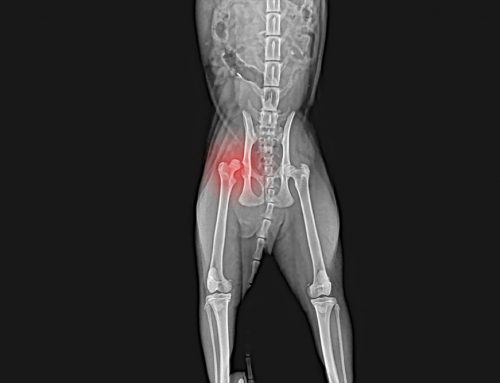
X-rays tell us which joints are involved and rule out the conditions that imitate arthritis, like a disc problem or a bone tumor, and we take those images here. From there we build a plan around your pet's actual life: a twelve-year-old Lab who still swims needs something different from a cat who wants the windowsill back. Fear Free handling, with pre-visit medication for pets who need it, means nobody is braced against us while we check how a hip moves, and a relaxed leg answers more honestly.
What Actually Helps a Sore Senior Pet Feel Better?
Comfort in an older pet comes from stacking a few modest things rather than finding one big one. A daily anti-inflammatory or a monthly injection that blocks arthritis pain at the nerve level, acupuncture, weight control, and steady low-impact movement each do a small amount. Together, they change how a dog or cat lives.
Monoclonal antibody injections are the newer piece, and they matter most for cats, whose kidneys limit how long they can stay on traditional anti-inflammatories. Versions exist for both species and are given monthly. The older standbys still earn their place: carprofen and similar NSAIDs for dogs, gabapentin for nerve pain, and omega-3 fatty acids in the food.
The one shortcut to skip is your own medicine cabinet. Ibuprofen, naproxen, and acetaminophen each cause kidney failure and stomach ulcers in dogs and cats, and in cats they can also damage red blood cells. One tablet can be enough. If your pet is hurting, call us instead.
Rehabilitation for arthritis does the one thing no medication can: it puts strength back into the muscles that brace a painful joint. We refer rehab out to a veterinary rehabilitation practice and stay in touch about the plan. Acupuncture we do offer, and it suits pets who can't take much medication or who need support between doses.
Warm-ups and cooldowns are two minutes of slow leash walking before a game of fetch and two minutes after it, and they keep one good afternoon in the yard from turning into three stiff days. Three short outings beat one long one. Our doctors build the pain management combination around bloodwork, other medications your pet is taking, and what you'd like your dog or cat to still be able to do.
Where Should You Start Changing the House?
Start underfoot, because it costs the least. A path of non-slip runners from the bed to the food bowl to the back door does more for a stiff dog than anything you can buy, and grip is where an arthritis-friendly home begins. After that, the job is taking the jumps out of the day.
| Spot in the house | For dogs | For cats |
| Bathroom | A flat, shaded potty spot close to the door | A large box with one low side, kept away from the stairs |
| Slick floors | Runners or yoga mats along the daily route; keep nails short and paw fur trimmed | A rug or cushion wherever they land after jumping down |
| Meals | Bowls raised to chest height for tall dogs, with a mat underneath for grip | Wide, shallow dishes, and water on every level they use |
| Leaving the house | A car ramp, a ramp for the deck steps, a harness with a rear handle | A sunny spot to perch at floor level |
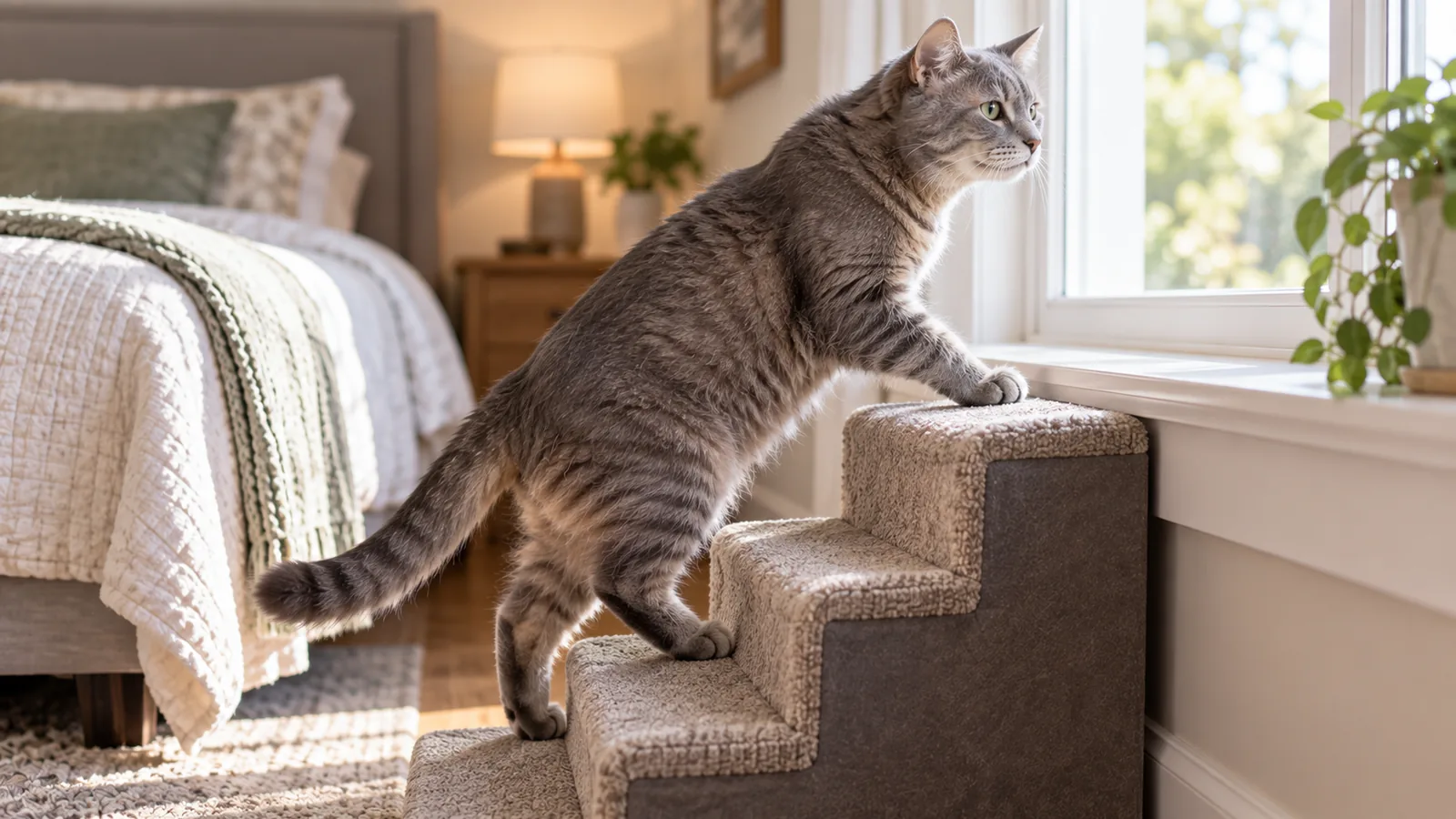
| Sofas and beds | A low, wide ramp or foam steps, with an orthopedic bed at the top | A padded step or ottoman up to the windowsill |
Home modifications for cats mostly solve the vertical problem, usually with a step up to whatever she used to reach in one jump. Ramps into the car, a harness with a rear handle, and rubber toe grips are assistive devices that let a pet keep doing things independently instead of being carried.
What Should an Older Pet Be Eating, and How Much?
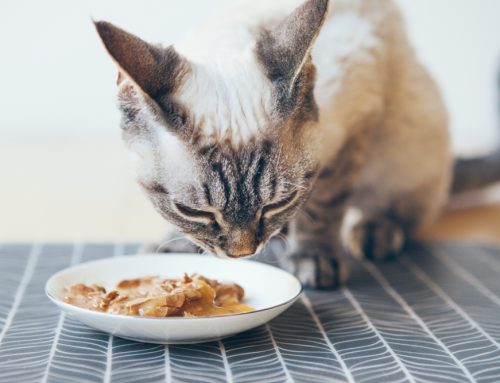
Senior nutrition has less to do with a bag labeled senior and more to do with digestible protein, honest calorie math, and ribs you can feel without pressing. Aging dogs and cats need protein to hold muscle, fewer calories than they burned at three, and a body condition score somebody checks on purpose.
Extra weight is the loudest thing in an arthritic joint. Every pound lands on hips and elbows that are already inflamed, and for a pet on medication, taking a little weight off often does more than raising a dose. Muscle is the quieter half. A dog or cat can hold the same number on the scale and still thin out over the topline and back legs, and that loss makes rising harder no matter how good the pain plan is. Crash dieting without enough protein backfires for the same reason.
Weight loss in an older cat is rarely just age. A ten-pound cat who drops a pound has lost a tenth of herself, and that earns a workup for kidney disease, hyperthyroidism, or diabetes. Supplements help at the margins, with omega-3 fatty acids carrying the best evidence for joints. Ask us before starting one, because a few interact with medications your pet may already take. Book weight and body condition checks while a diet is in flux, since three months of numbers tell us what one weigh-in can't.
What If the Change Is in Their Head and Not Their Joints?
An old dog who paces at two in the morning, or a cat who stands on the hinge side of an open door and calls out at nothing, isn't being stubborn. That is what cognitive dysfunction looks like, a close cousin of dementia in people, and it tends to show up at night before it shows up during the day.
Before we settle on that diagnosis, we rule out the conditions that mimic it, because most of them are treatable:
- High blood pressure
- An overactive thyroid in cats
- Fading vision or hearing
- A urinary tract infection behind the house-soiling
- Pain that only becomes obvious after dark
Bloodwork and a careful exam sort out which.
Predictability is what helps at home: meals, walks, and bedtime on the same clock, furniture where it was last month, nightlights on the path to the water bowl, and grip underfoot for a pet navigating partly by memory. Food puzzles and short sniffing walks tire an old dog more kindly than distance does. Medication and diets that support brain aging slow the decline for some pets, and behavior medicine is part of what we do here.
How Often Should a Senior Dog or Cat Be Seen?
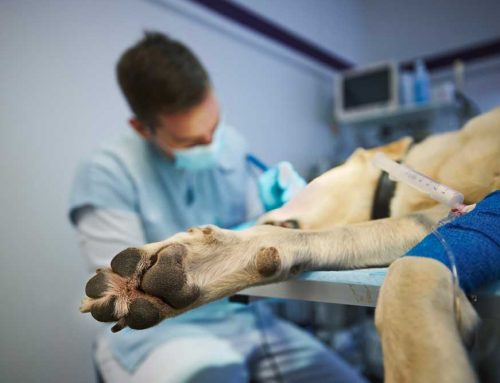
Twice a year is the standard once a pet crosses into their senior years, and the reason is the trend line. Preventive testing for seniors picks up kidney, liver, and thyroid changes months before a pet looks sick. Twice-yearly bloodwork beats waiting for symptoms to show up.
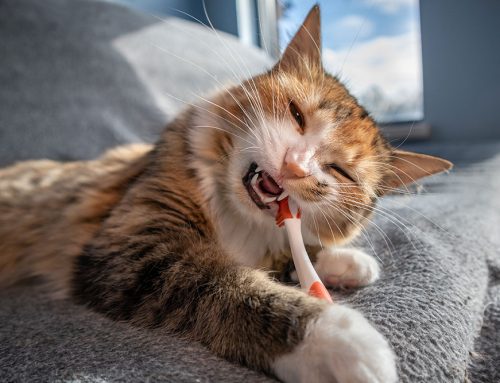
Six months is a long stretch in an older body. A creatinine that's crept upward, a thyroid value drifting in a cat, half a pound gone: none of that is visible from across the living room, and all of it is easier to manage early. Wellness exams and in-house diagnostics cover most of what a senior visit calls for. We run blood and urine testing, take X-rays of joints and chests, use ultrasound to look inside the abdomen, and take dental X-rays to find painful tooth roots hiding under a mouth that looks fine.
Some things shouldn't wait for the next appointment:
- Breathing trouble: labored effort, or any open-mouth breathing in a cat, needs attention right away.
- Collapse or sudden weakness: especially alongside pale gums or a swollen belly.
- Repeated vomiting or no appetite: more than a day without eating is serious in a cat.
- Straining in the litter box: little or nothing produced is an emergency in male cats.
We handle urgent problems during our regular hours, so call ahead and we'll tell you whether to come straight in.
How Do You Know If They're Still Enjoying Their Days?
Scoring appetite, mobility, hygiene, and the ratio of good days to bad on a quality of life scale turns an impossible decision into a trend you can actually watch. One hard Tuesday doesn't answer the question. Four weeks of small notes usually does.
Keep the record simple. A calendar on the fridge, one mark for a good day and another for a bad one, carries some of the weight on days when you're tired and not seeing clearly.
Comfort-focused care is a real plan, not a holding pattern. Pain control, appetite support, nausea medication, help with hygiene for a pet who can no longer groom, and a house rearranged so everything sits close to the bed can buy genuinely good weeks. Reach out and we'll go through where your pet stands: what hurts, what can still be treated, and what the coming weeks are likely to hold.
Senior Pet Comfort Questions Pet Families Ask Us Most
Is my dog too old to start arthritis treatment?
Your dog is not too old to start arthritis treatment, and fifteen is no reason to leave pain untreated. What age changes is the homework: we check kidney and liver values before starting an anti-inflammatory and choose medications that fit everything else going on. Some of the biggest turnarounds we see are in pets whose families assumed the stiffness had gone too far to treat. Two weeks on the right plan usually answers the question for you.
Will a ramp or a support harness make my pet weaker?
A ramp or a support harness tends to make a pet stronger, not weaker. A dog who's afraid of slipping moves less, and moving less is what costs muscle. Ramps and harnesses take the frightening part out of the day, and a pet who isn't frightened keeps doing ordinary things. Use the aid for the jump or the staircase, then let them cover flat ground on their own four feet.
My cat still jumps on the counter. Doesn't that mean her joints are fine?
Cats compensate long before they quit. Watch how she gets up there rather than whether she does. A cat who used to land on the counter in one motion and now goes chair, then stool, then counter is already routing around something sore. Pausing before a jump, landing heavily, or an unkempt patch over the hips all count. Bring us video of the takeoff, since she'll never demonstrate it here.
Helping Your Senior Pet Age Comfortably at Home
Most of what keeps an old dog or cat comfortable is unglamorous: a rug in the right hallway, a ramp instead of a jump, a pain plan adjusted when the weather turns. You don't have to know which of those matters most for your pet, or decide alone what a slower year means. Star of Texas Veterinary Hospital sees a lot of Austin's seniors, and the changes caught early are usually the ones that buy the most comfortable months.
When you notice your dog taking the stairs differently or your cat giving up a favorite perch, schedule a visit and we'll figure out what's behind it and what to change at home.